MY ROLE
UX & Visual Designer, Product Strategist
TYPE
Client Project, CMU
DELIVERABLES
Mobile App, Design System
TIME
Jan - Apr 2024
LOCATION
Pittsburgh, PA
OVERVIEW
Background and Team
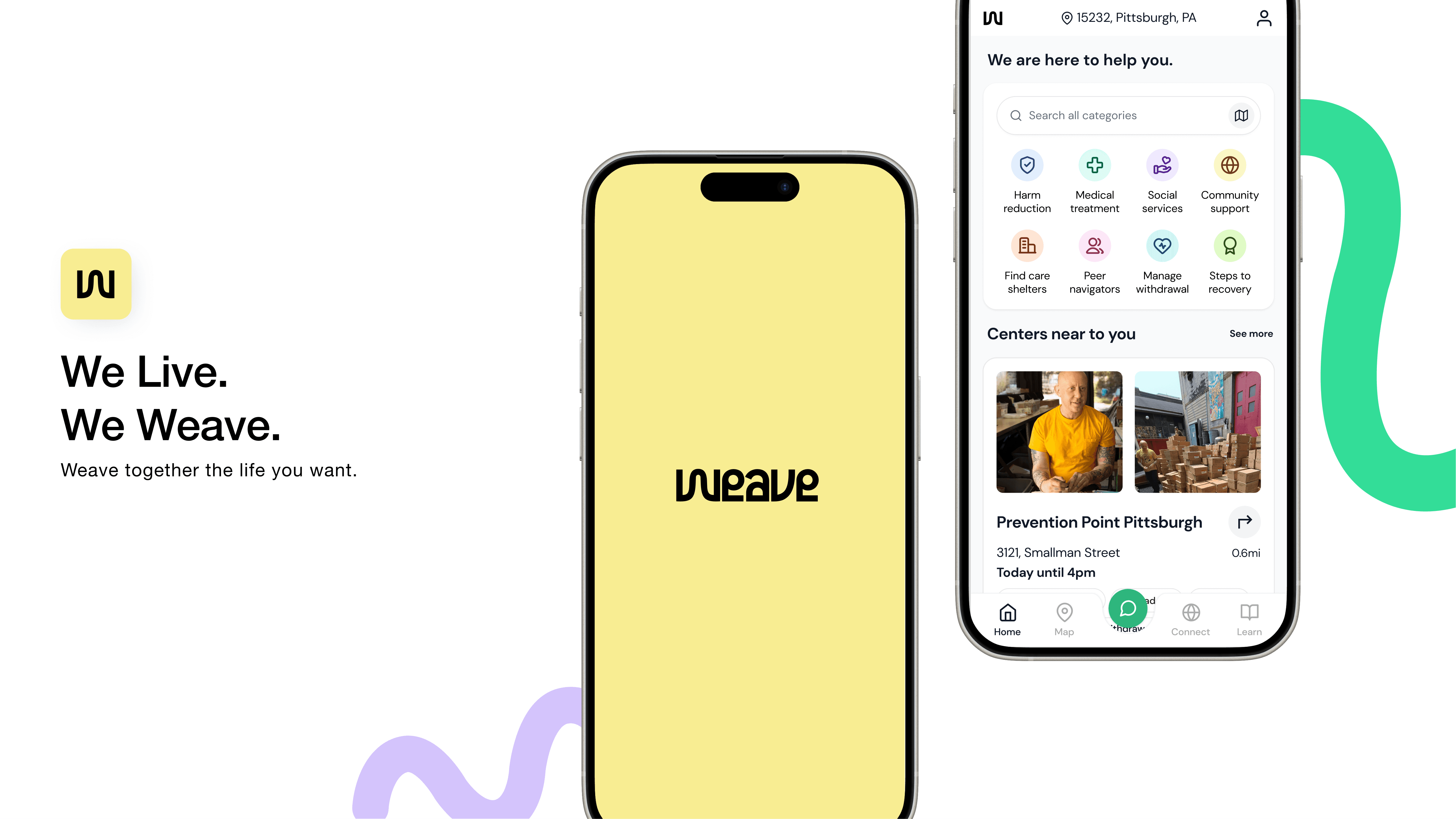
A service design collaboration with UPMC and local Pittsburgh community organizations. Partnering with Paul Jaudrey, a medical specialist at UPMC, we designed a mobile app proposal to help people navigate local harm reduction services.
I worked with my team and led the designs for the Mobile App, building end-to-end design system and UI, to foster inclusivity and accessibility for harm reduction services.



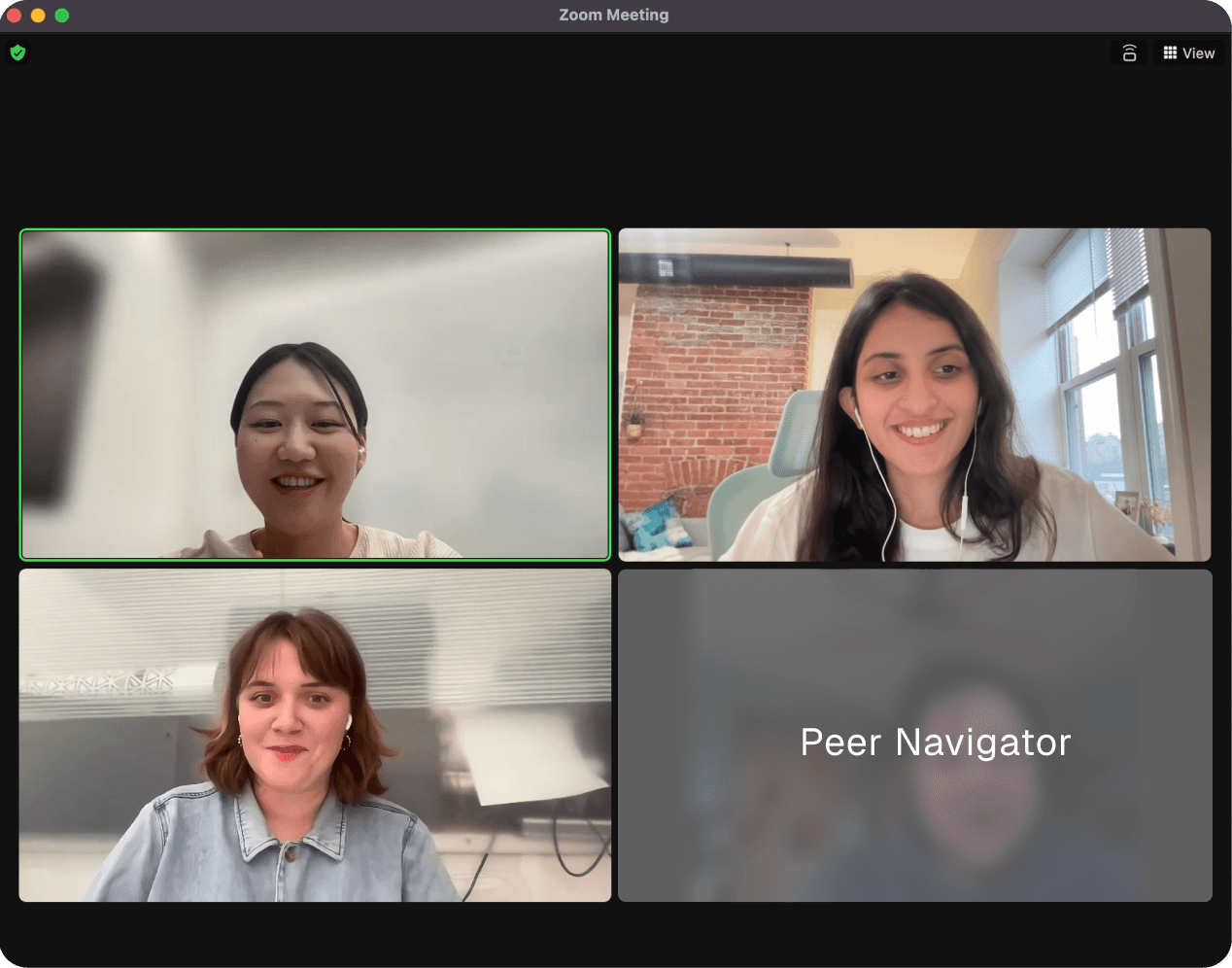
The Design Team
UX RESEARCH
The Problem Space
Vulnerable Population

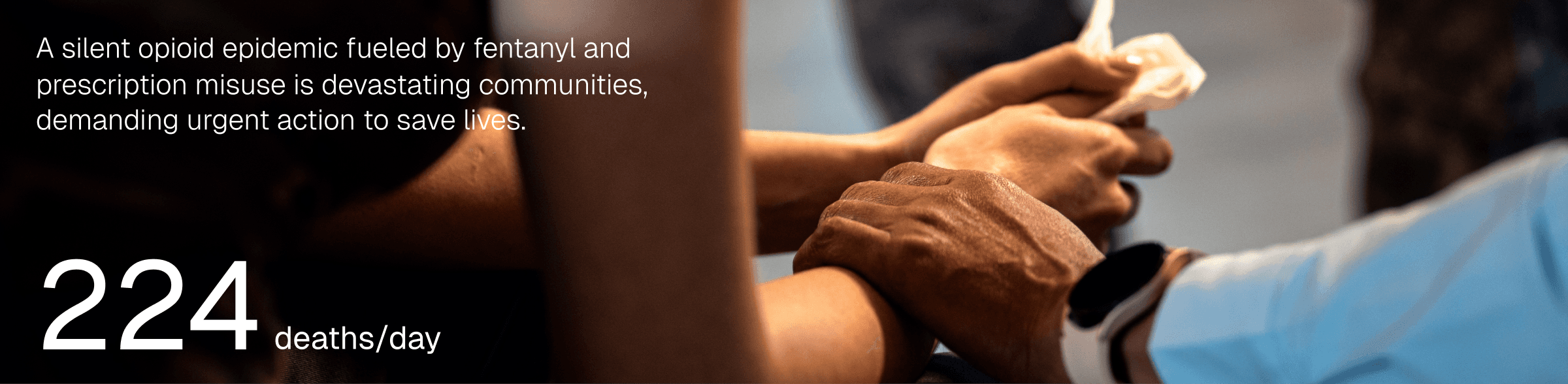
People struggling with addiction often face serious health issues, mental health challenges, financial hardships, and limited access to care.
High-Risk Consequences

Addiction brings immediate dangers like overdose and severe health problems, along with long-term effects that can tear families apart and disrupt entire communities.
Sensitive Subject Matter

Opioid misuse is deeply personal and touches on painful struggles as well as wider social issues. It requires us approach this issues empathy and respect.
CLIENT HAND-OFF
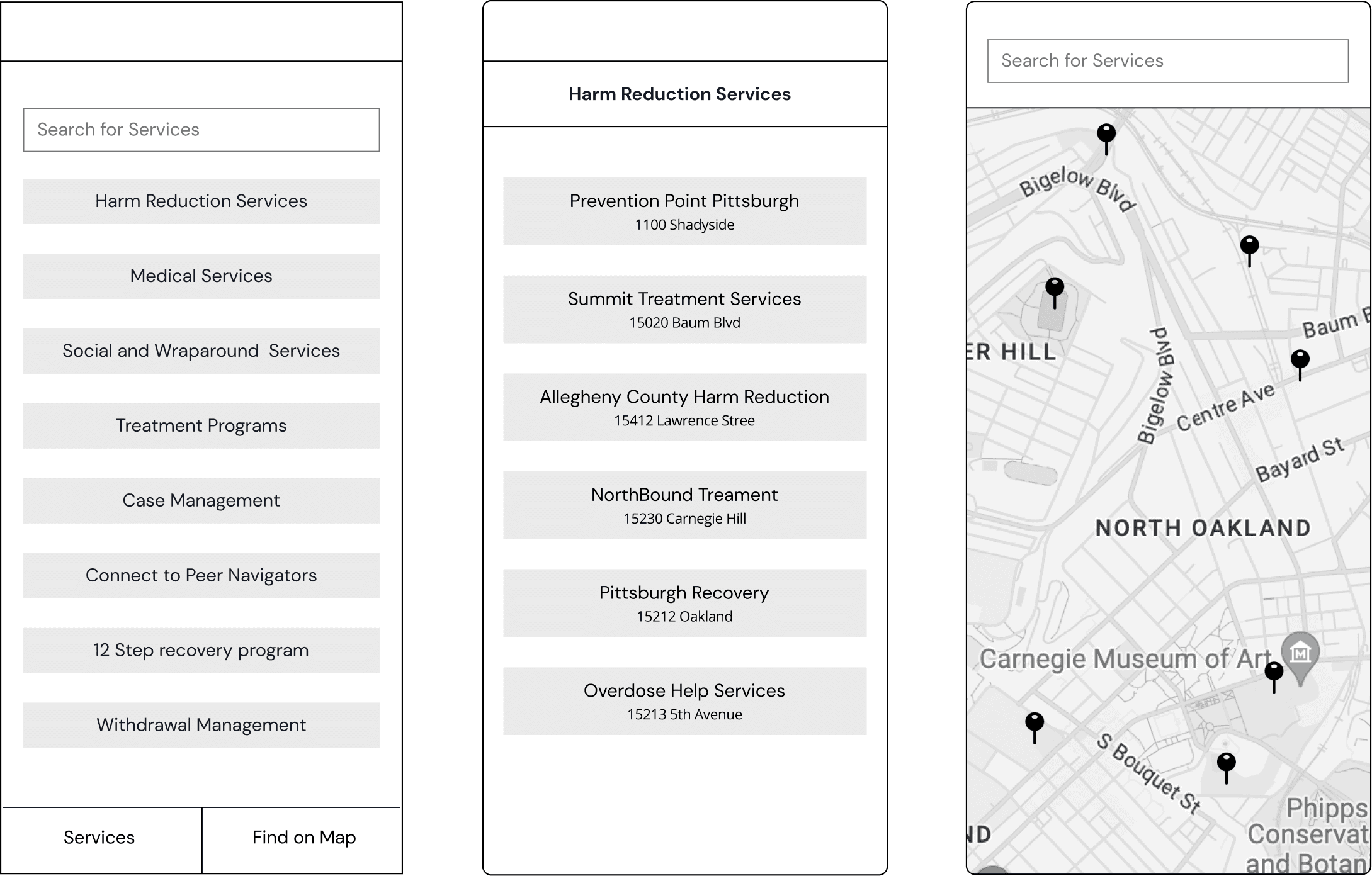
Product Requirements, Initial Wireframes
USER RESEARCH
Interviews and Literature Review
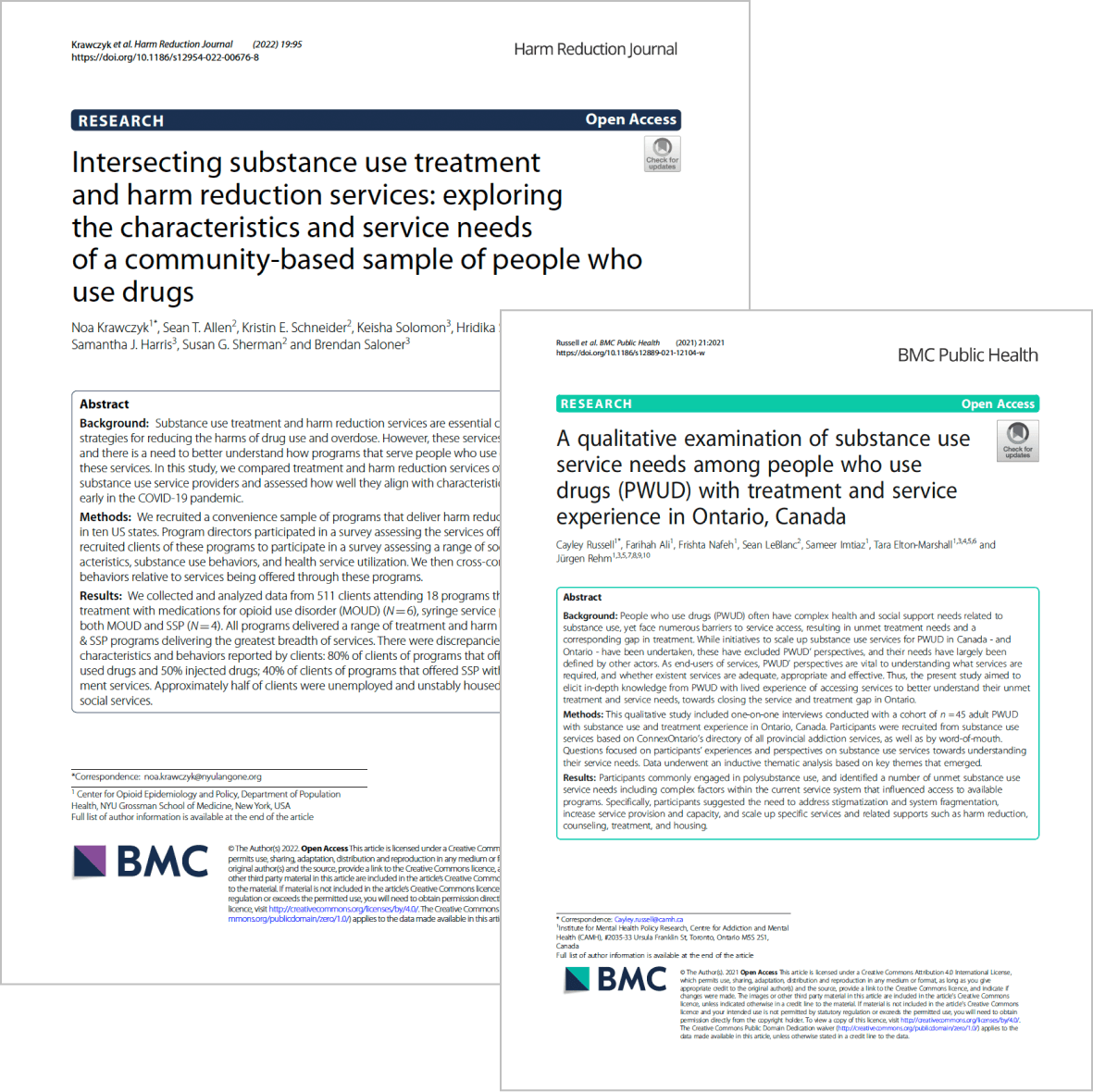
To get a deeper understanding of our user's needs and pain points, we conducted design research which included reviewing papers interviews with people who were struggling with addiction and people who were in recovery.
INSIGHTS
What are the pain-points?
1/ Fragmented Services
Services are complex and hard to navigate make it difficult to access timely recovery and care.
Waiting lists are a huge issue sometimes I have to wait four to six months just to get in somewhere.
Participant 22
2/ Stigma and Fear
People avoid seeking help due to fear of harsh judgment and stigma, which creates a significant barrier to accessing services
The stigma of addiction turns seeking help into a mark of shame, when it should be a path to healing.
Participant 12
3/ Lack of Support
Service centers lack a safe, welcoming community spaces, forcing individuals to seek out help on their own.
Knowing I have a safe place to go every night is essential to my recovery, but people don’t have that support.
Participant 10
INSIGHTS
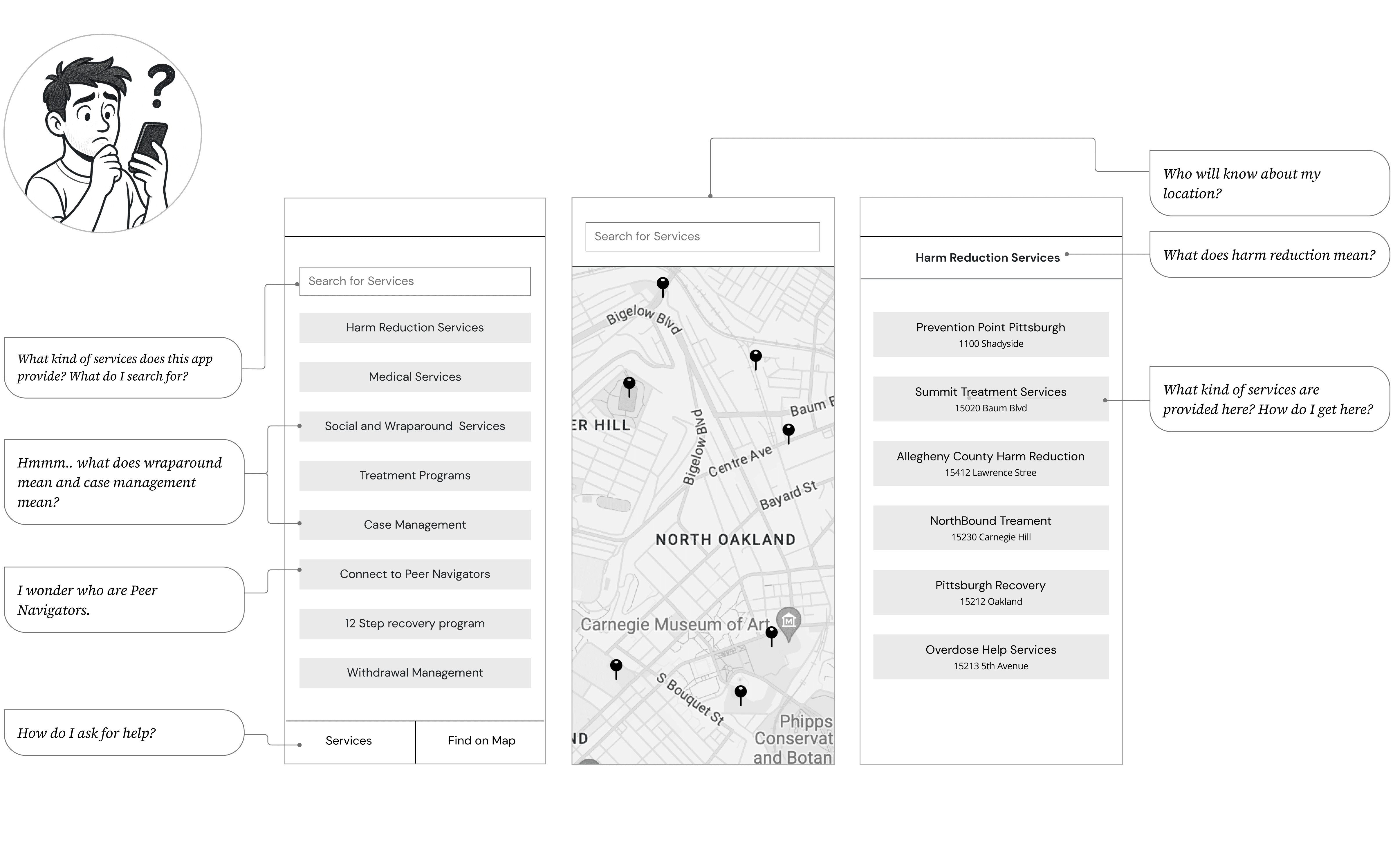
How would users approach this app?
DESIGN APPROACH
Design Goals and Principles
Since we were designing for users in extremely highly sensitive and often time life-threatening it was crucial that our solution be safe, trustworthy, and supportive

USER TESTING
Feedback from Stakeholders and User's Experiences
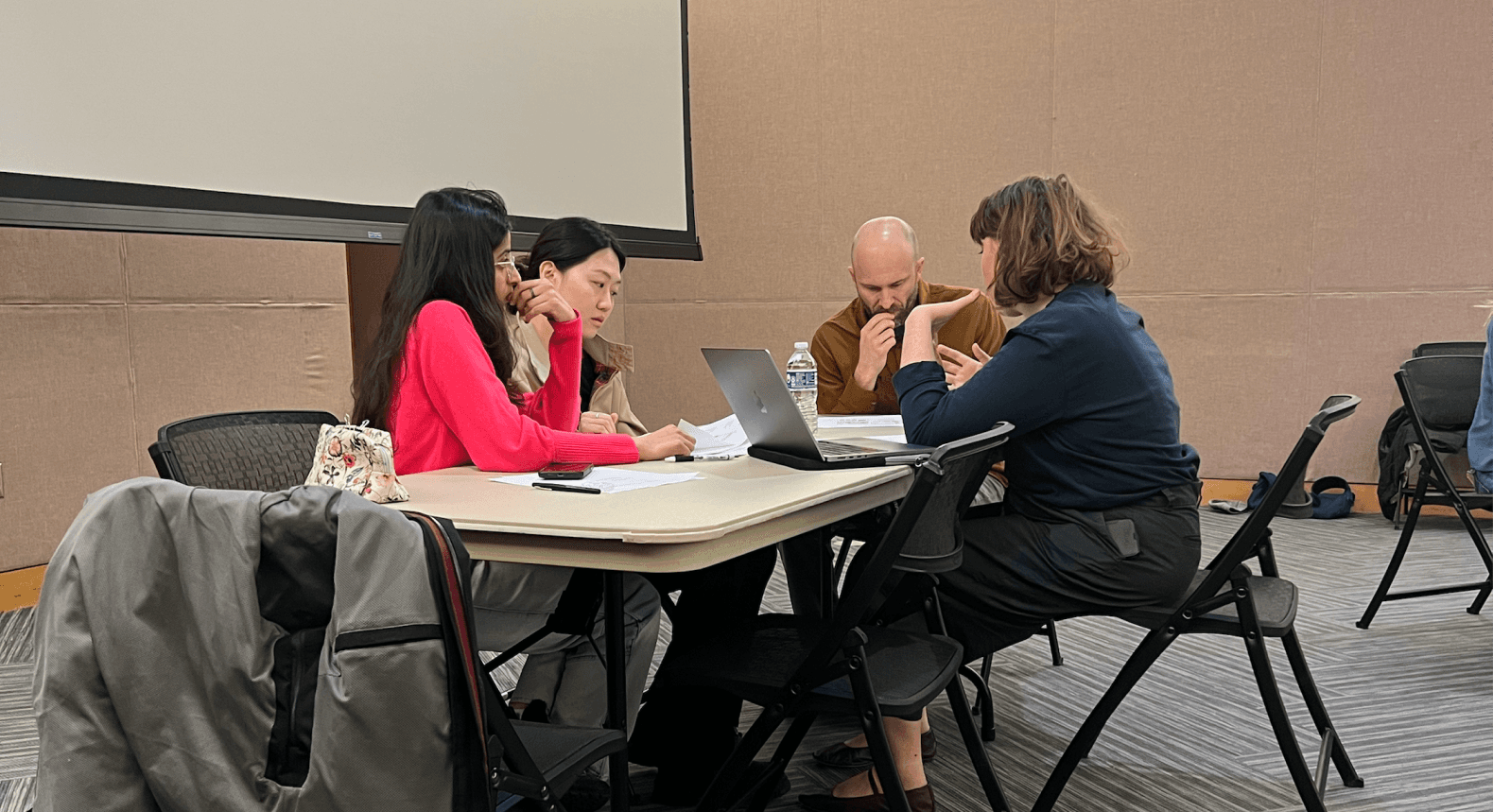
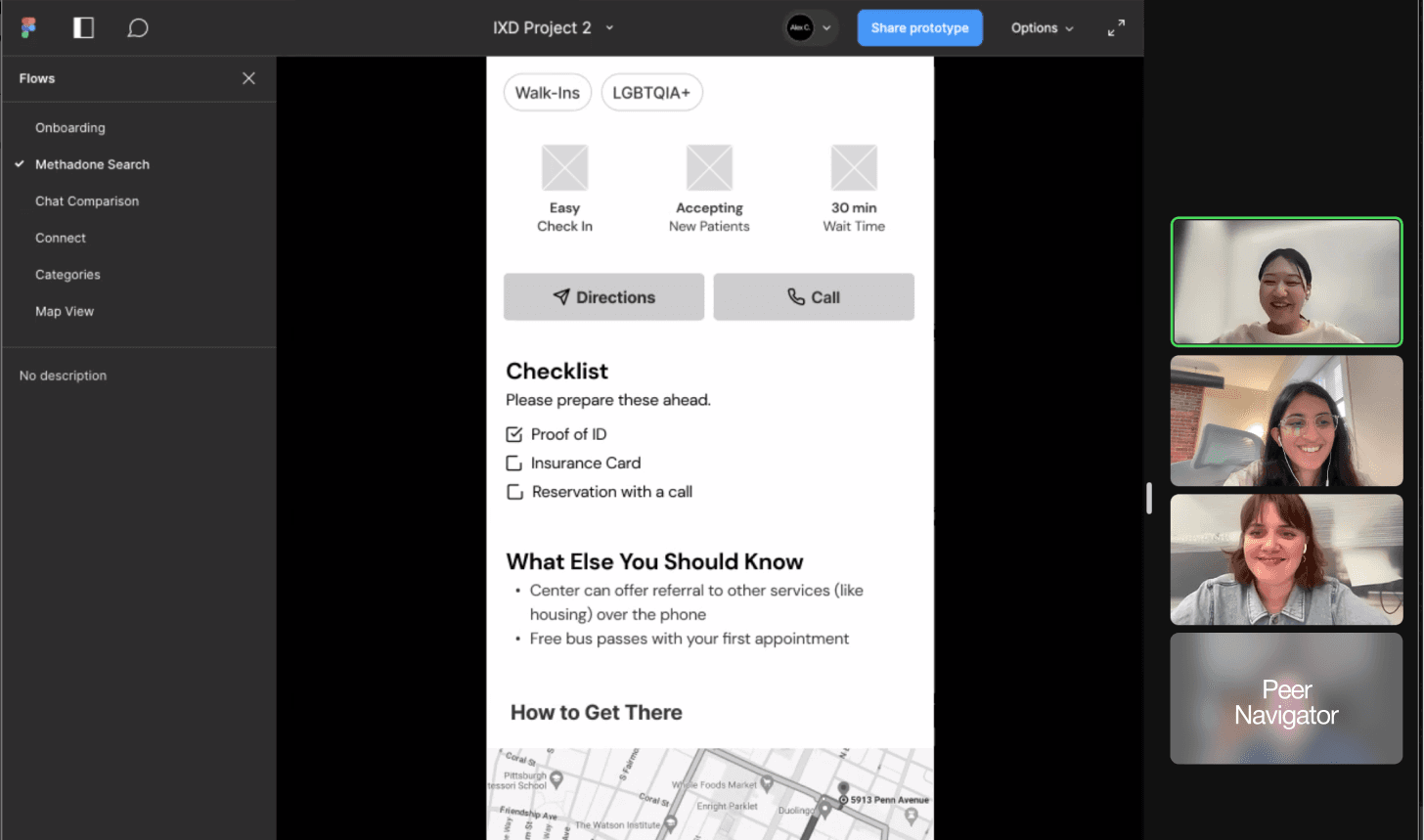
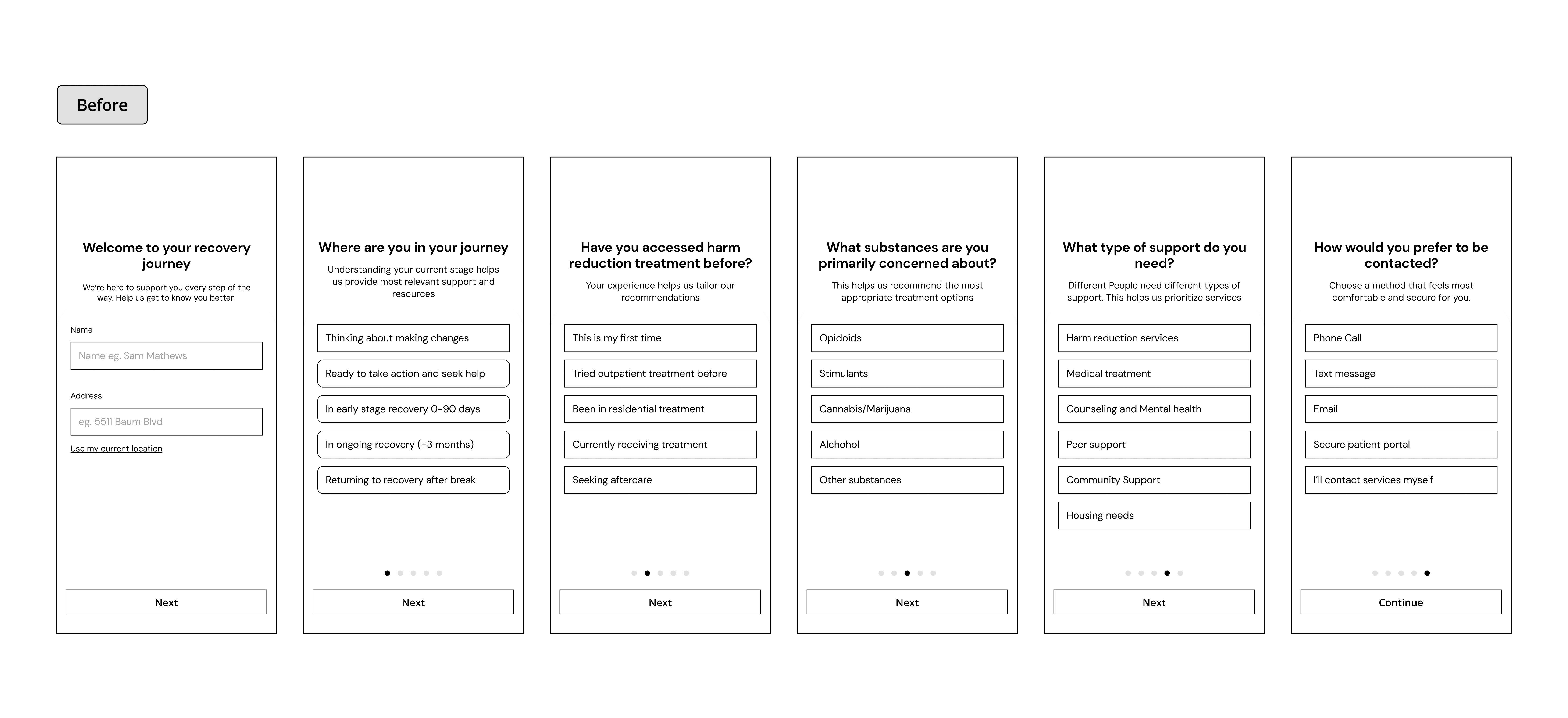
We presented our blue print and wireframes to both Dr. Joudrey and peer navigators who work on ground with the target audience which helped us narrow our focus
DESIGN DECISIONS
Designing the Key Features
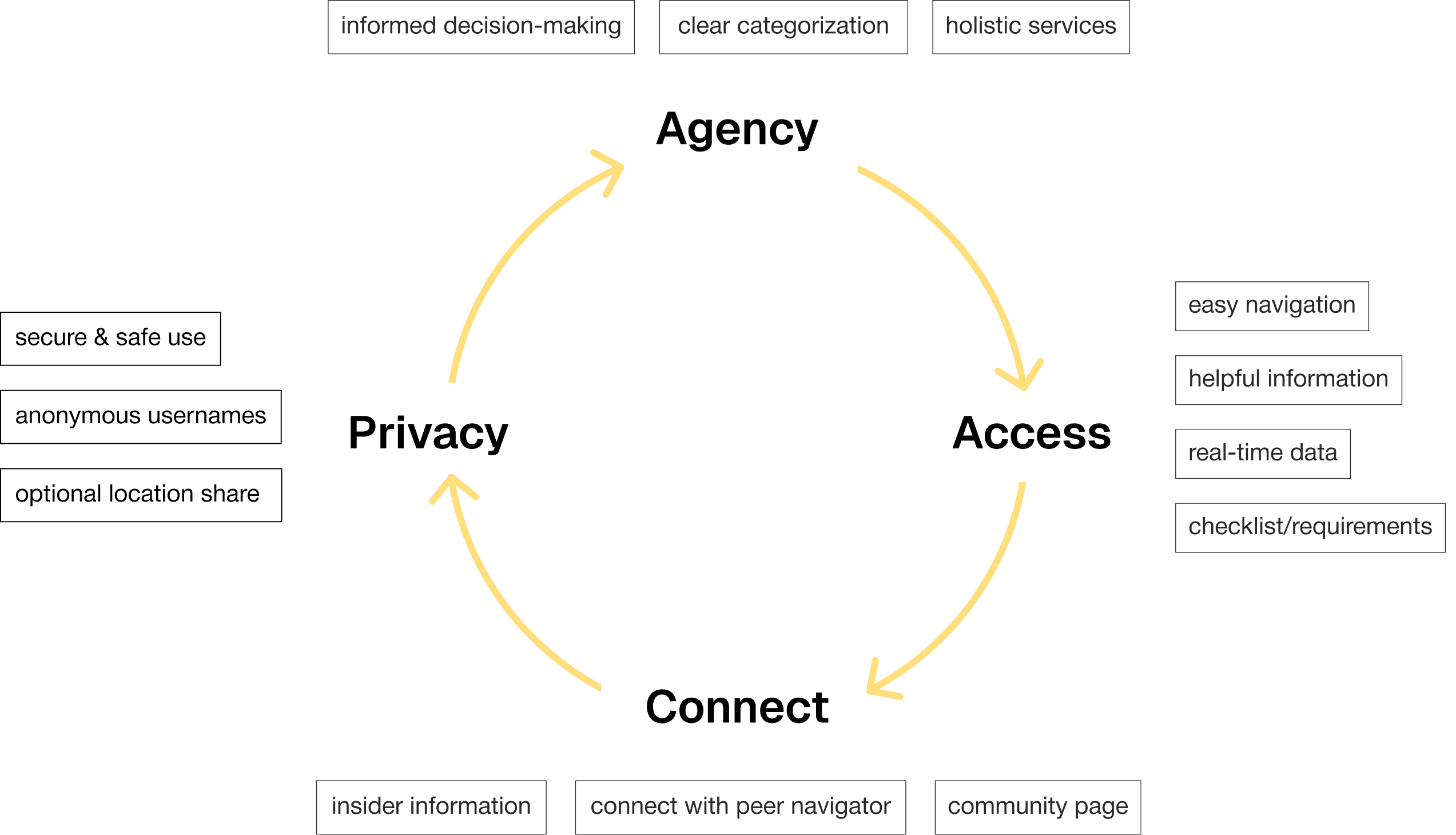
We centered the values of the app around accessibility, agency and privacy to create a safe space for our audience to connect with local services with the end goal of improving their life quality as a whole. We used our values to define the main features and structure of our final product.
DESIGN SOLUTION
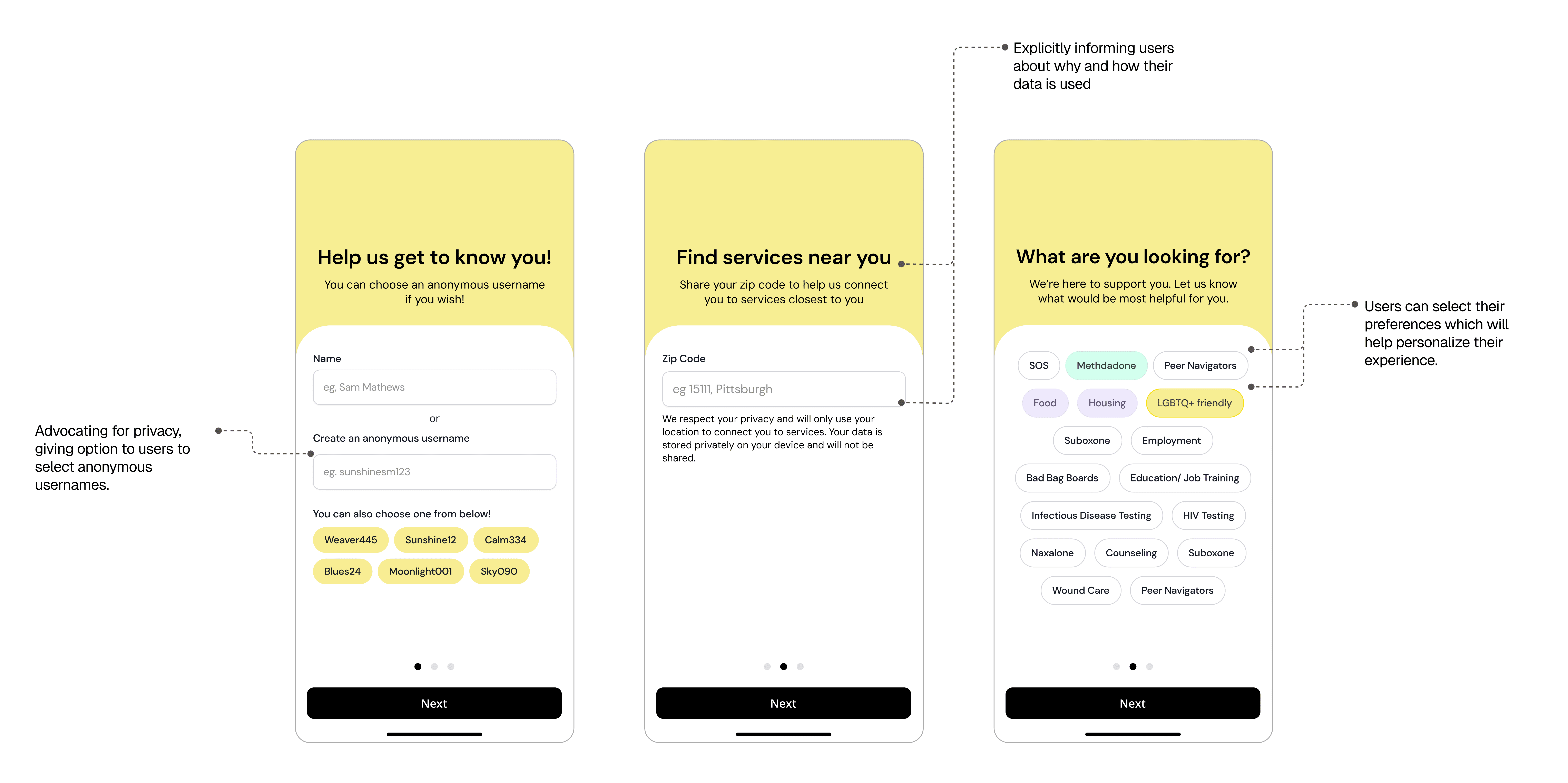
Privacy first, Agency foremost
Weave provides safe space for users by protecting user privacy and allowing for anonymity.
HOME, LIST & MAP
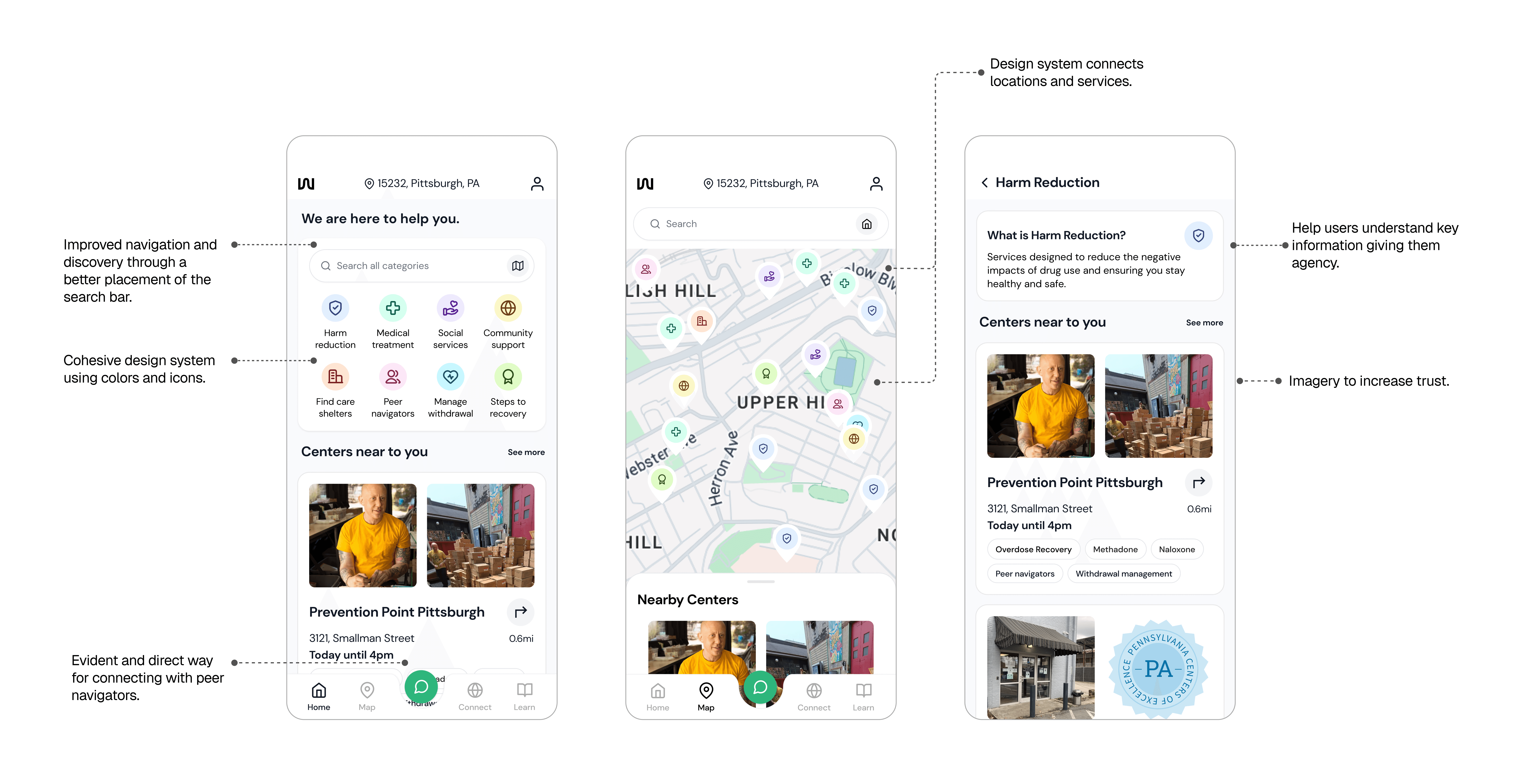
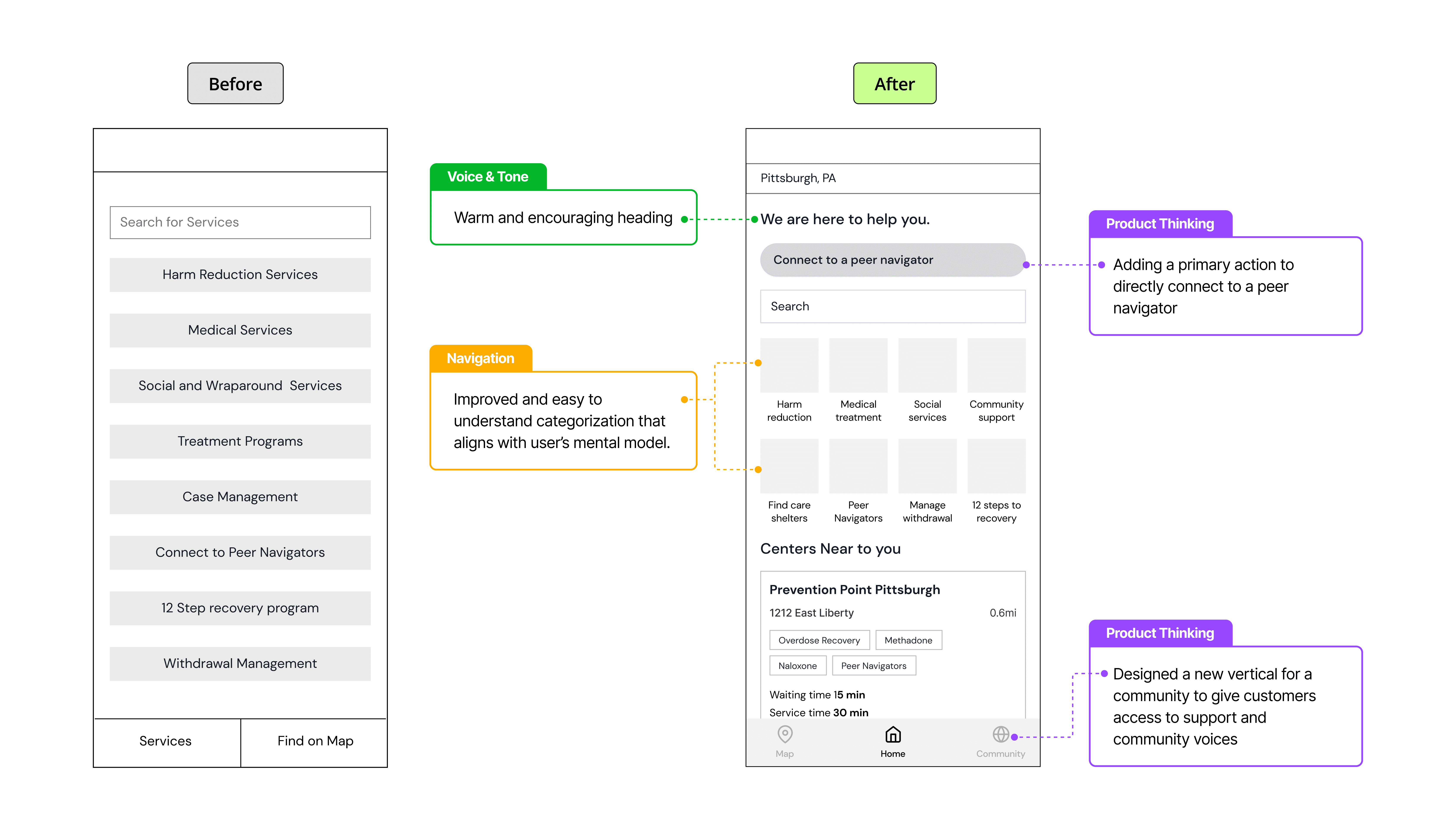
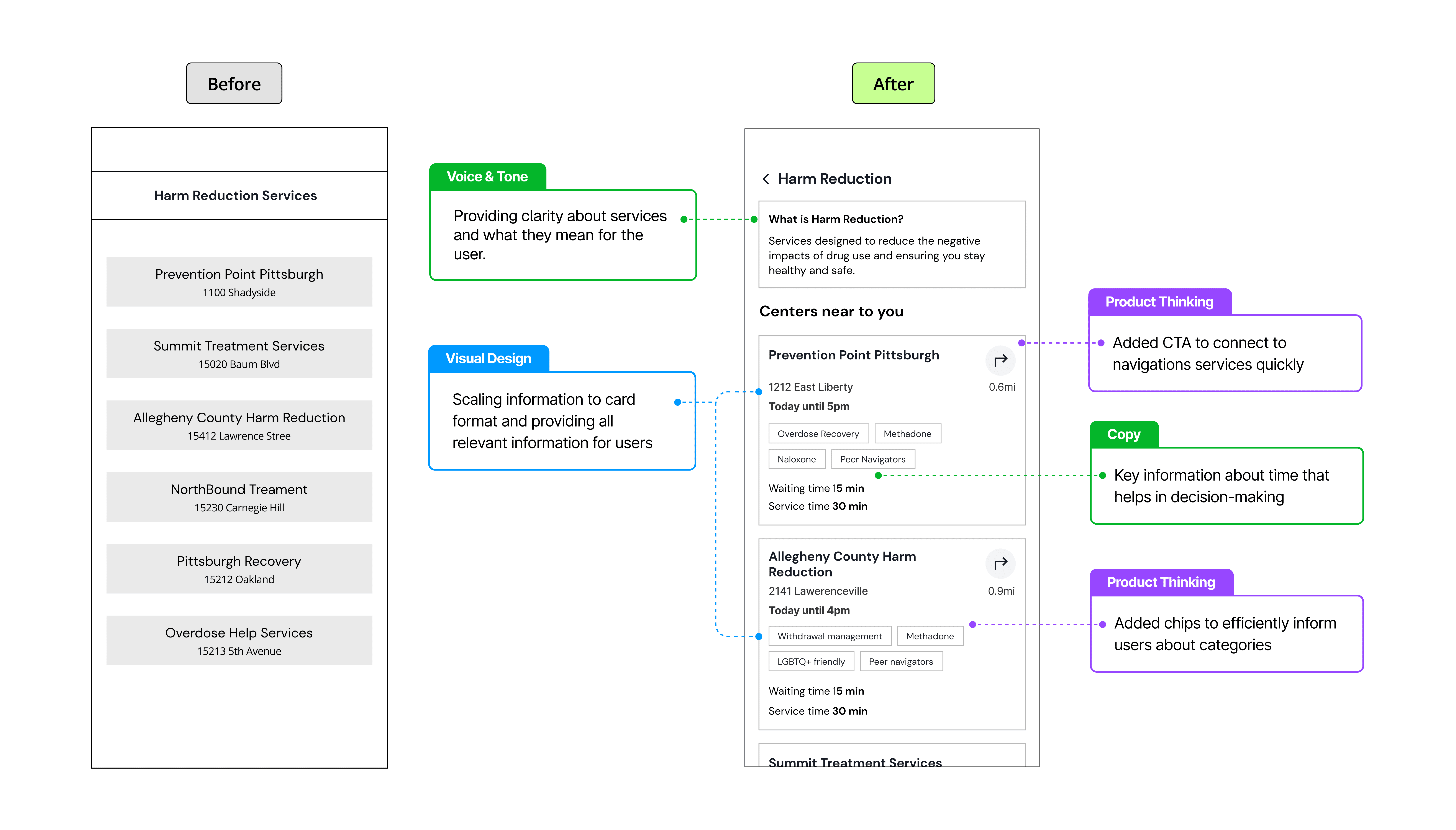
Easy Access, Navigation and Map Touch Points
Weave connects diverse users to harm reduction services with the transparent, easy access, and judgement-free information. Using interchangeable map and list view, users can easily navigate and learn about service centers.
CONNECT & LIVE CHAT
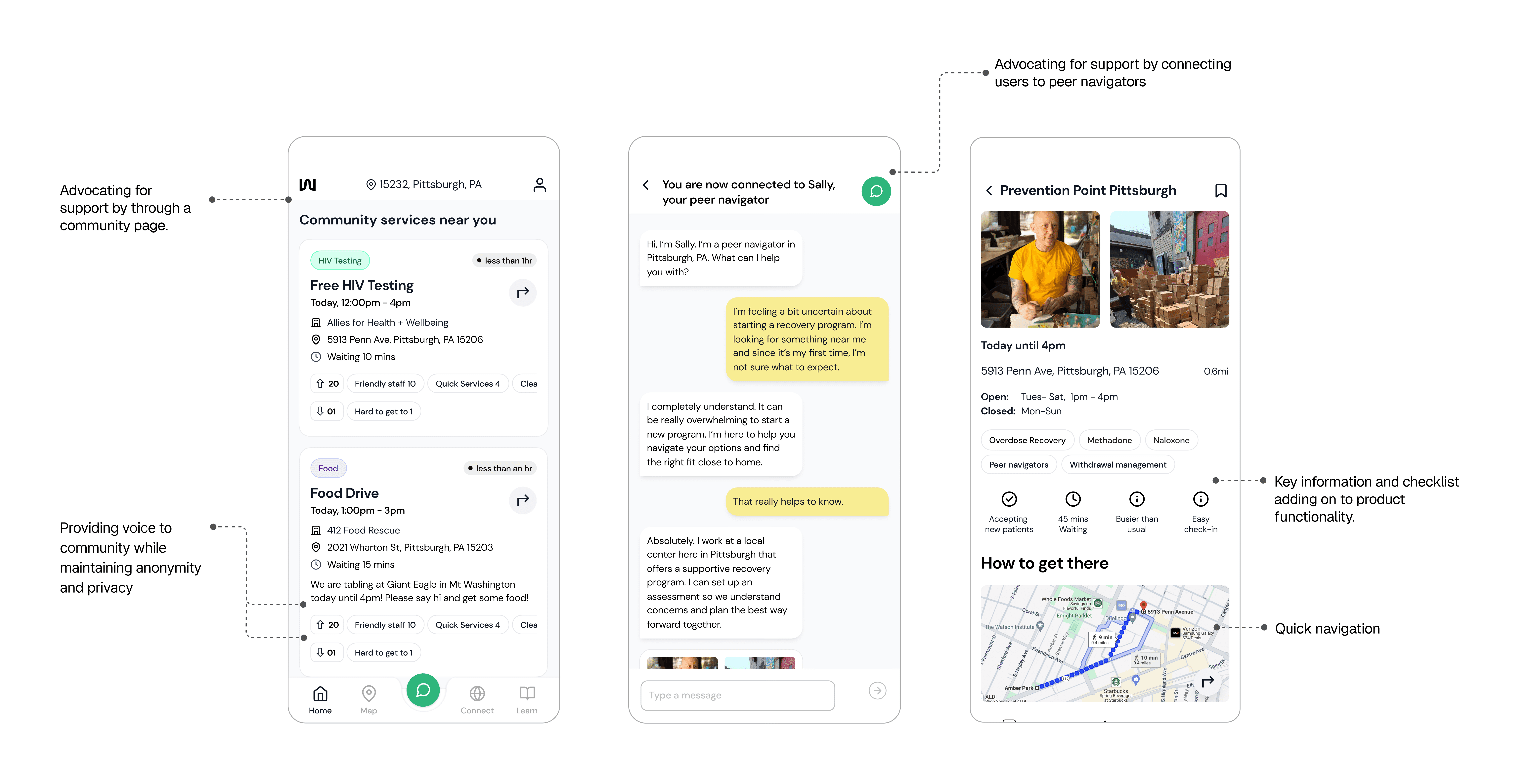
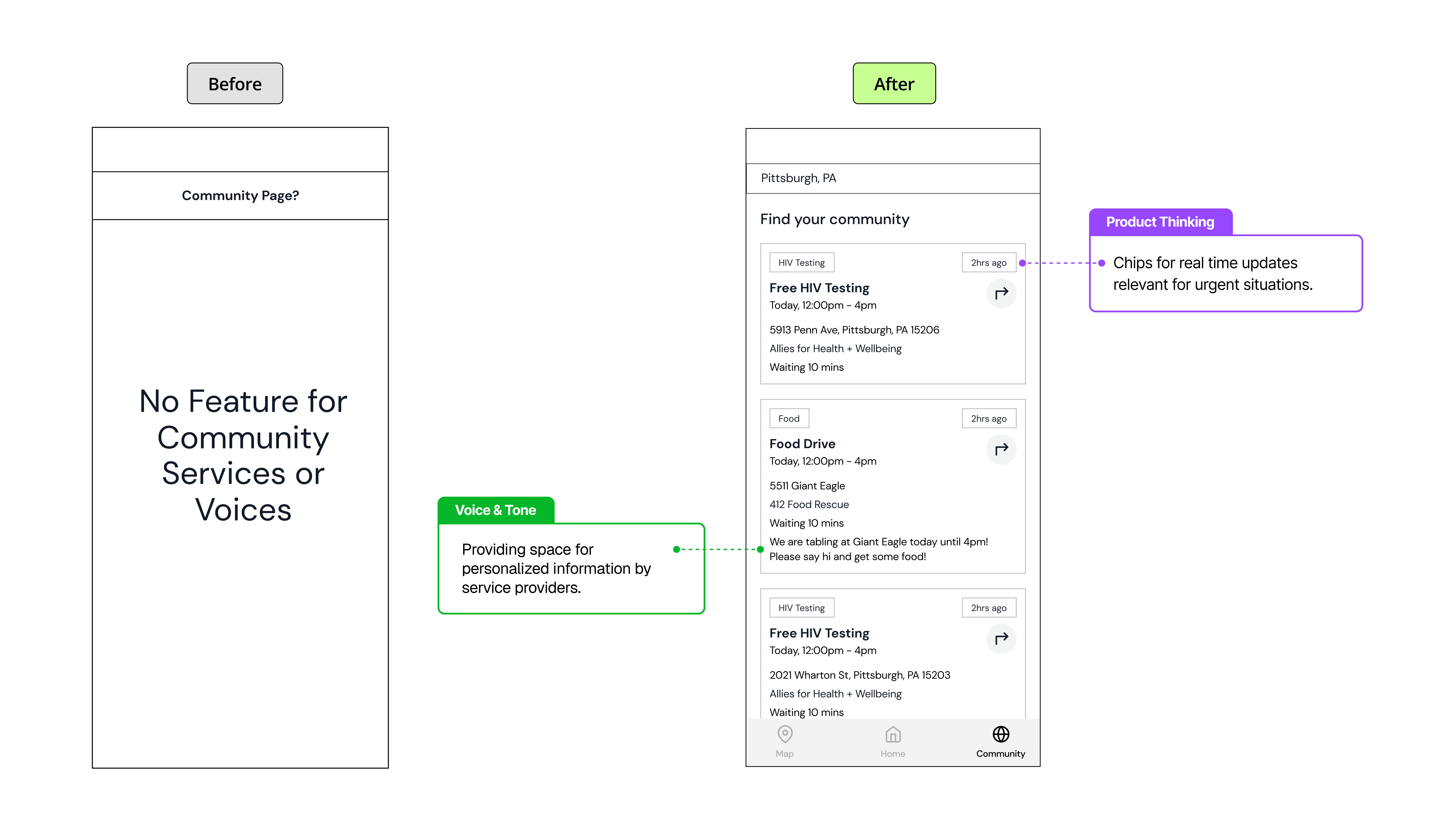
Community Connection & Peer Navigators
DESIGN SYSTEM
UI, Color & Typography
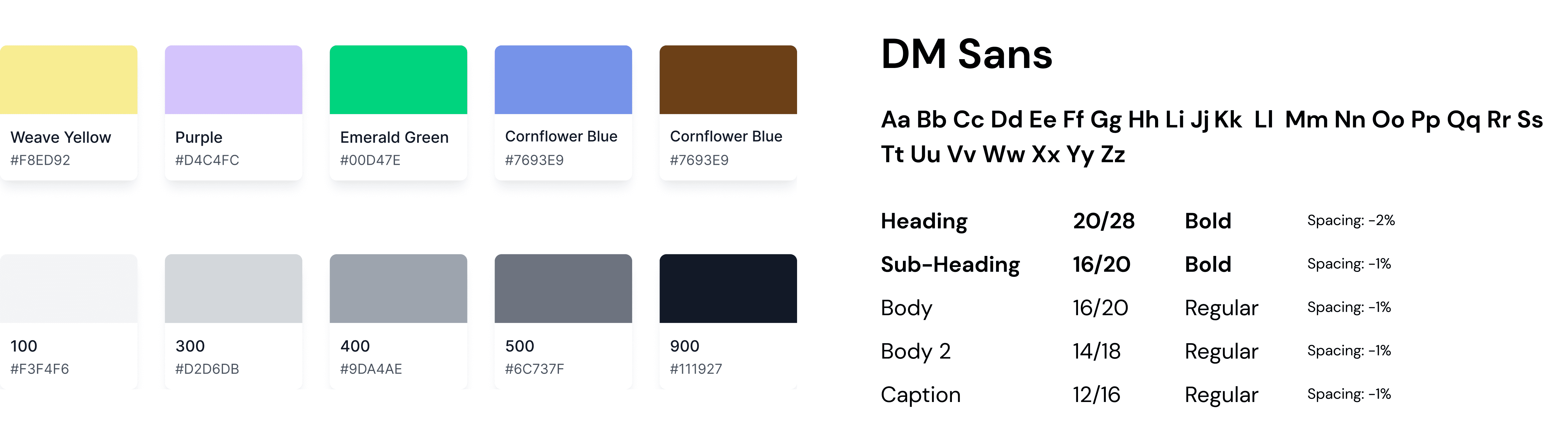
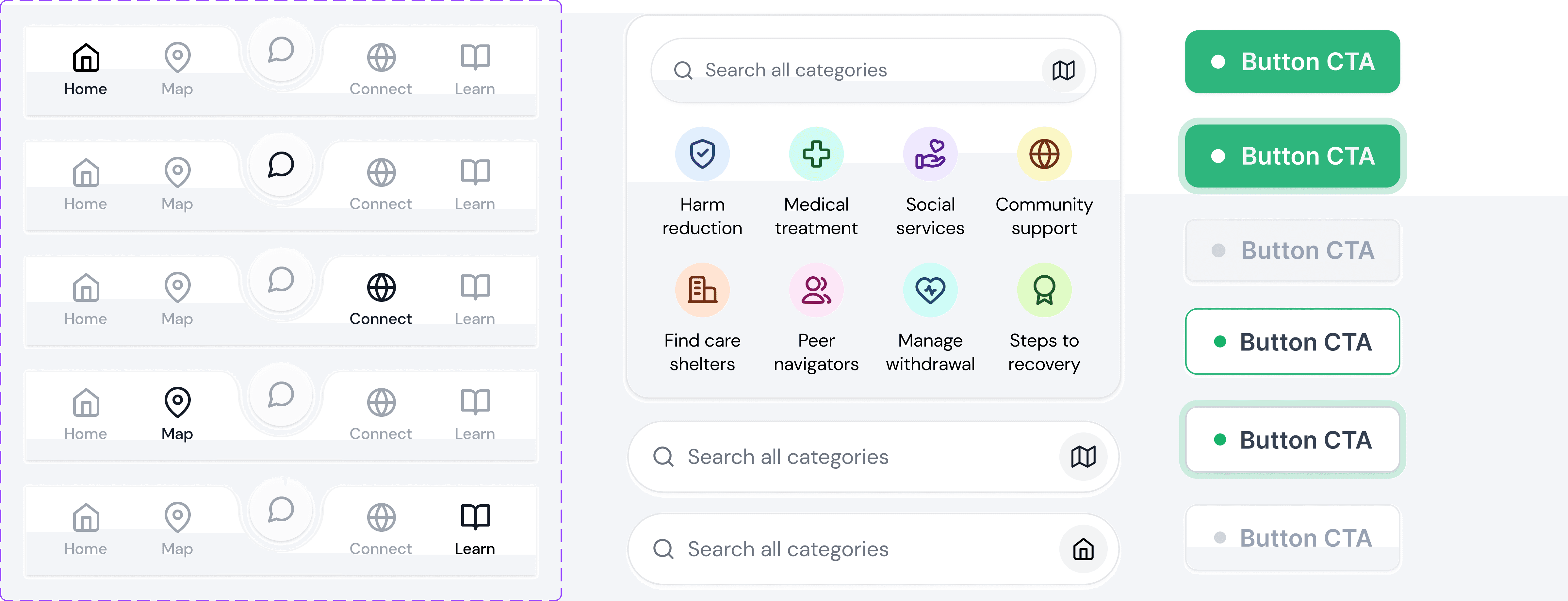
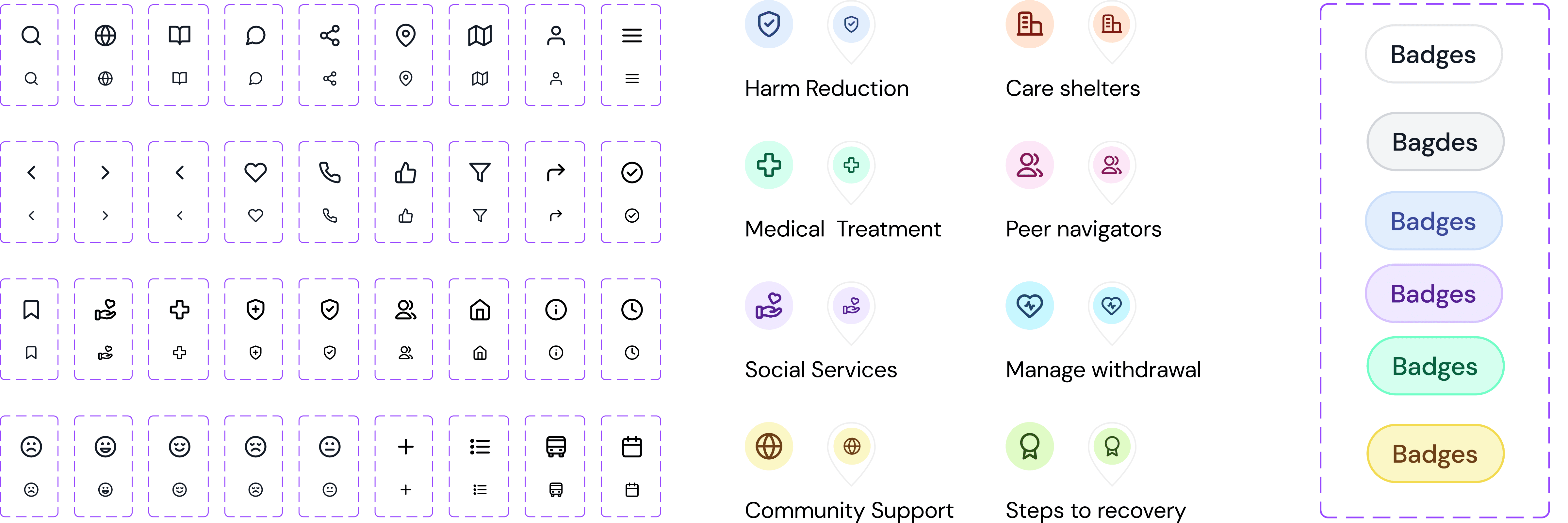
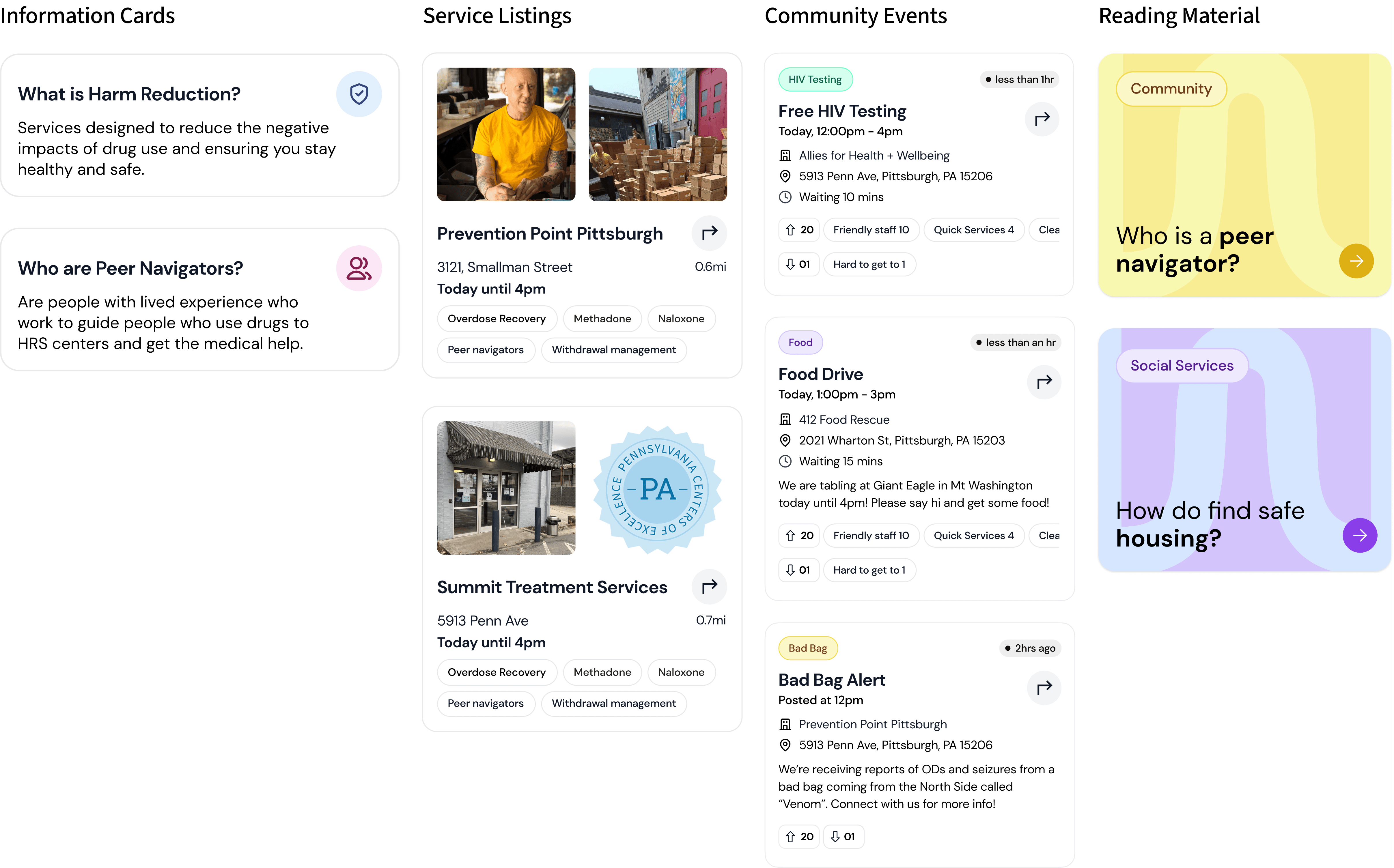
We built a lightweight design system for key design UI elements for the entire end-to-end experience. We used playful colors, expressive icons, and micro-interactions to weave the brand through the experience and draw audience in.
Color and Typography
Navigation and Buttons
Icons and Badges
UI Components
LEARNINGS
Key Takeaways
Design Grounded in Research
Integrating research insights along with user feedback through user-testing helped us build safer ans trusted platform.
Data and Iteration based Design
Each design iteration helped refine our vision, turning challenges into opportunities for continuous improvement
Voice and tone
Focusing on an content and copy that guides and support users through helpful, straightforward and clear language
User centered
By involving users with lived experience, we aimed to design features that can solve user’s existing pain points.